


Achievements and Announcements
ACHIEVEMENTS
- UniSA PhD wins international Three Minute Thesis
- Nine UniSA researchers hit the ARC jackpot in latest round of funding
- Final alumni awards celebrate UniSA champions
- Grant Stevens and Nicola Spurrier among UniSA doctorates
- Global recognition for marketing research leader
- UniSA student wins International Student of the Year
- UniSA’s Women in Innovation Awards winners
- National OSHC program takes out an SA Science Award
- Global recognition for tech innovator
- Data mining scientist tops Australia in his field two years in a row
- UniSA researchers added to ARC College of Experts
- New UniSA humanities Fellow
ANNOUNCEMENTS
- UniSA achieves carbon neutrality for directly controlled operations
- 9 Light Square named the Lloyd Building
ACHIEVEMENTS
UniSA PhD wins international Three Minute Thesis
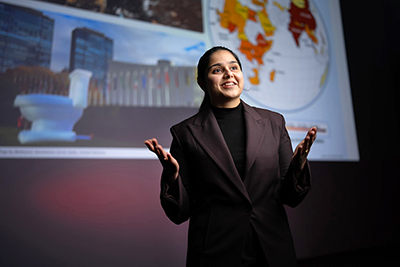
In a first for UniSA, PhD candidate Namrata Nair took out first prize not only in the University Three Minute Thesis (3MT®) competition, but also the overall Asia Pacific event.
Nair’s powerful research analysed sanitation access and its impact on community safety in India.
Using sample data from over 600 districts, Nair found that in a third of these regions, more than half of the population still lacks access to an indoor toilet. Her research also uncovered a strong relationship between poor sanitation infrastructure and increased crime rates and delivered a framework for intervention.
“When something as basic as a toilet is out of reach, it creates deep feelings of deprivation and resentment,” Nair says.
“With district level mapping, the government can now take more localised action and also effectively implement community sanitation programs.”
Professor Sandra Orgeig, UniSA Dean of Graduate Studies, commented that “Namrata’s work offers governments practical tools to improve dignity and build safer, fairer societies.
“This year’s finalists were especially strong across diverse fields – well done to all.”
Competition runner-up Anita Kral presented groundbreaking research on the long-term effects of mould exposure on asthma development. Using lab-grown lung tissue, Kral discovered that a single exposure to mould particles rewires lung stem cells to express asthma-inducing signals, and these effects persist long after the initial exposure.
People’s Choice award went to Cheryl Chan, whose research is laying the foundation for a new generation of tiny, high-performance satellites capable of identifying intricate detail day or night, and invisible movements such as plant growth and volcanic activity.
The 3MT® is an international competition celebrating research undertaken by PhD candidates. Competitors must present their research using non-technical language, with just one slide, in just three minutes.
The 2025 UniSA Grand Final was presented by The Bob Hawke Prime Ministerial Centre and the Office for the Dean of Graduate Studies, supported by UniSA Academic Units.
Nair went on to compete against 55 semi-finalists across the Asia-Pacific region, which was then narrowed down to a final competition between eight finalists.
Nine UniSA researchers hit the ARC jackpot in latest round of funding
Nine UniSA researchers have been collectively awarded almost $5 million in grant funding by the Australian Research Council (ARC) in recent weeks, for projects to start at the new Adelaide University in 2026.
The successful recipients cover research as diverse as unravelling PFAS dark matter in food; new methods for tracking marine organisms; community projects to address loneliness; and eco-friendly alternatives to combat antimicrobial resistance.
Five researchers have won funding for ARC Discovery Projects, another three researchers will be supported through the Linkage, Infrastructure, Equipment and Facilities (LIEF) scheme, and one researcher has won an ARC Discovery Early Career Research Award (DECRA).
The ARC Discovery Project recipients are:
Professor Albert Juhasz (Unravelling PFAS dark matter in food contact material): Using a novel suite of analytical techniques, this $669,847 project will assess the magnitude of PFAS in food contact material and how to manage its impacts to reduce the direct and indirect health costs on Australians.
Associate Professor Zoe Doubleday (Unlocking the potential of radiogenic isotopes for ocean conservation): This $624,818 project will road test a radiogenic isotope (neodymium) that can track diverse marine organisms, from sharks to sea snails. It will generate crucial data on their mobility and origins to improve the monitoring and conservation of marine animals under threat.
Dr Mitchell Goldsworthy (Aperiodic neural activity across time): This $561,919 project will investigate the effects of aperiodic (irregular) neural activity on human cognitive performance, brain excitability and neuroplasticity. The findings will help neuroscientists understand how fluctuations in neural activity across time affect human behaviour.
Associate Professor Fanke Peng (Neighbourhood and Community Houses and Centres (NCHCs) and social inclusion): This $517,452 project will investigate the role of neighbourhood and community houses and centres in fostering social inclusion, reducing isolation, and building social capital to create more resilient communities.
Professor Lia Bryant (Exploring rural women’s needs for creative spaces through co-design): Rural women make up a third of the nation’s female population but have more limited access to support services than their urban counterparts. This $502,244 project will help address this by developing culturally diverse creative spaces that are unique to rural Australia.
The successful ARC Linkage recipients are:
Associate Professor Rietie Venter (Mining soil microbiomes for bioactives to combat antimicrobial resistance): Antimicrobial resistance – driven by the overuse of antibiotics – is a global crisis affecting veterinary, medical and agricultural industries. This $556,608 project aims to mine soil microbes to develop sustainable, cost-effective, and eco-friendly alternatives to traditional antimicrobials, improving animal husbandry and ensuring Australia’s food security.
Associate Professor David Radford (Whole-of-community approaches to regional migration, settlement and retention): This $485,955 project will analyse diverse migrant settlement communities in regional areas over four years, focusing on the NT, SA, NSW and Victoria, identifying successful outcomes to inform government policies.
Dr Jun-Jie Zeng (3D-Printed FRP Reinforced Energy-Storable Concrete Thermal Insulation Panel): This $322,690 project will pioneer innovative 3D-printed, FRP-reinforced energy-saving concrete for thermal insulation panels. It will integrate concrete with phase-change materials, digitally constructing panels that will make buildings more sustainable and environmentally friendly.
UniSA Postdoctoral Research Fellow Dr Barrie Shannon has also won a $512,765 ARC Discovery Early Career Researcher Award (DECRA) for a project exploring how LGBTQ+ young people’s use of social media can enhance their wellbeing and civics education. His research outcomes will complement school-based teaching that is relevant to LGBTQ+ young people.
Final alumni awards celebrate UniSA champions
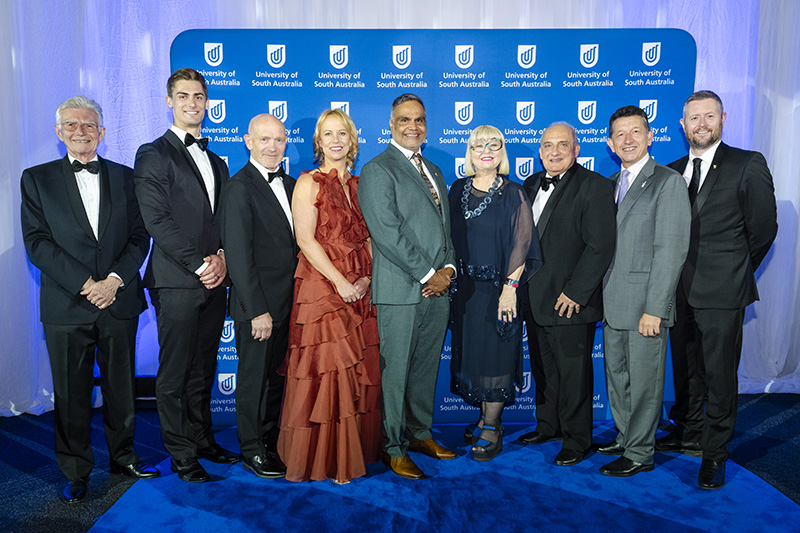 UniSA Chancellor John Hill (left) and Vice Chancellor Professor David Lloyd (right) wth the 2025 UniSA Alumni Award winners, L-R: Matthew Glaetzer, Eric Phillips, Louise Adams, Dale Agius, Heather Croall, Mario Verrocchi and Angelo Kotses.
Seven outstanding leaders were honoured at UniSA’s final Alumni Awards event on Saturday October 25.
The gala dinner, the largest ever alumni awards celebration for the University, was held at the University’s Pridham Hall at City West campus.
Awards were presented to polar adventurer Eric Philips OAM, Olympic sprint cyclist Matthew Glaetzer, Commissioner for Aboriginal Children and Young People Dale Agius, Aurecon CEO Louise Adams, Adelaide Fringe CEO Heather Croall AM, Bickford’s Group Managing Director Angelo Kotses and Chemist Warehouse CEO and co-founder Mario Verrocchi.
UniSA Vice Chancellor Professor David Lloyd says the University’s Alumni Awards celebrate the innovators and visionaries of its 250,000-strong global alumni community.
“It’s fantastic to bring the achievements of our diverse, pioneering alumni to the forefront, knowing that UniSA has played an important role in their journeys,” Prof Lloyd says.
“I am immensely proud of who we are honouring this year. They represent exceptional leadership and are wonderful role models for contributing to society through lives fuelled with purpose and passion.”
In accepting their awards, recipients acknowledged the role of UniSA in helping to shape their journeys and success.
Polar adventurer Philips’ spectacular career has included guiding ski treks to the North and South Poles and adventuring into space earlier this year.
“My training at UniSA taught me how to take risks - which risks are worth taking and which ones are not,” Philips says.
“I could be taken by a polar bear, I could plunge through thin ice, fall into a crevasse; I could get hypothermia, I could get lost - but I didn’t.
“My education at UniSA has been absolutely pivotal in everything I did from then through to this moment now.”
Grant Stevens and Nicola Spurrier among UniSA doctorates
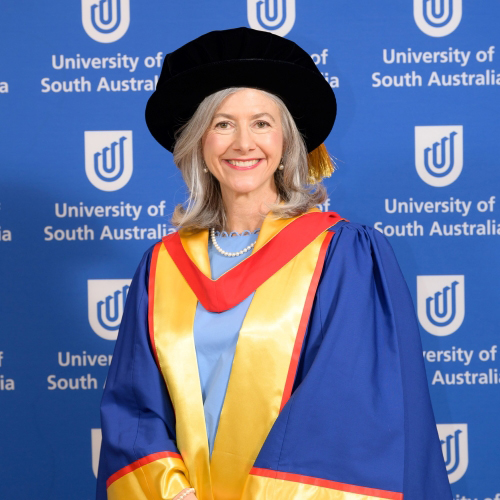
Two local leaders made up a small cohort of eminent South Australians who received honorary doctorate degrees at the October University of South Australia graduation ceremonies.
Professor Nicola Spurrier was awarded an honorary doctorate in recognition of her outstanding services to South Australia. A respected leader in health, Prof Spurrier’s 30-year career spans clinical practice, academia, policy and leadership.
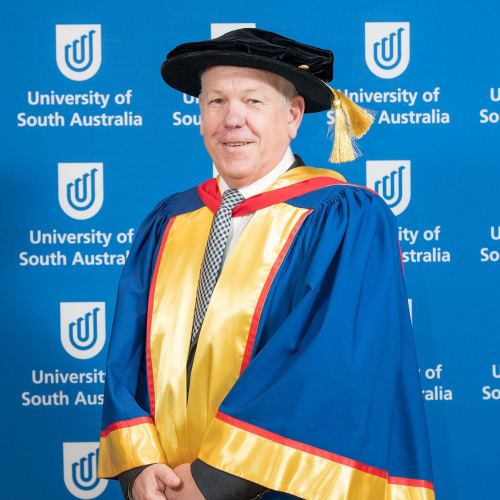
Police Commissioner Grant Stevens APM LEM received an honorary doctorate for distinctive services to the community through his 42-year career with South Australian Police (SAPOL).
UniSA Vice Chancellor Professor David Lloyd welcomed Prof Spurrier to the UniSA community and congratulated Commissioner Stevens – a UniSA alum and previous Alumni Award winner – on his newest accolade.
“Chief Public Health Officer Professor Spurrier’s illustrious career included taking a leading role in the State’s response to the COVID-19 pandemic, where her calm and transparent manner earned her the respect of the South Australian community,” Prof Lloyd says.
“Commissioner Stevens is another respected South Australian who is highly regarded within the public sector and the broader community, specifically for his integrity and commitment to community safety, justice and reform.”
Honorary doctorates were also awarded to Douglas Gautier AM and Pauline Carr.
An internationally recognised leader in the arts, Douglas Gautier AM has been the CEO and artistic director of the Adelaide Festival Centre since 2006 where he established major festivals and initiatives including OzAsia, the Adelaide International Guitar Festival, and First Nations arts programming.
Chancellor of the new Adelaide University and previous UniSA Chancellor, Pauline Carr has contributed her executive expertise in business improvement, governance, compliance and risk management to some of the nation’s most significant enterprises and ASX-listed companies.
Two Fellows of the University were awarded to UniSA Council members Ian Richard Smith AM and Mary Patetsos AM, together with a posthumous Emeritus Professorship to Roger Eston, who pioneered the development of UniSA’s Invictus Pathways Program.
Global recognition for marketing research leader
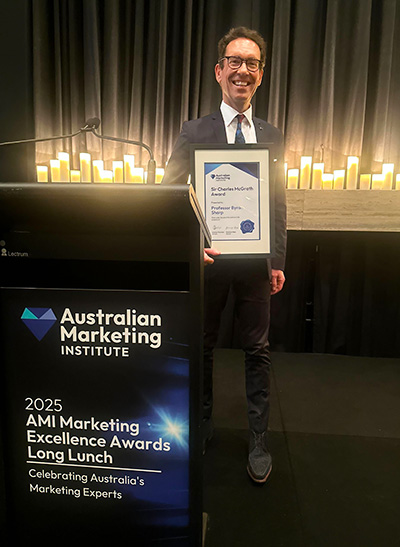
One of the world’s most recognised authorities on marketing, UniSA’s Professor Byron Sharp, has been awarded the Sir Charles McGrath Award by the Australian Marketing Institute.
The Sir Charles McGrath Award was established in 1976 and recognises individuals who have contributed through exceptional business performance, as well as mentoring, advocacy and development, in the marketing profession.
Previous recipients have included former Qantas CEO James Strong, former Woolworths CEO Roger Corbett, former ABC Chairman Justin Milne and former Network Seven CEO Maureen Plavsic.
Professor Sharp says he is honoured to be acknowledged alongside previous participants who are leaders of some of Australia’s biggest businesses.
“I founded a ‘business’ that is now globally famous and quite a good export earner for Australia, but I know that this award is for bringing science to marketing, and to boardroom discussions around the world,” he says.
Prof Sharp is director of the world’s largest centre for research into marketing – UniSA’s Ehrenberg Bass Institute – which has become a global leader in marketing and advertising research and is supported by some of the biggest brands on the planet.
Celebrating its 20th year in 2025, the Ehrenberg-Bass Institute is sponsored by brand juggernauts such as McDonalds, Nestle, PepsiCo, and AstraZeneca.
UniSA’s Women in Innovation Awards winners
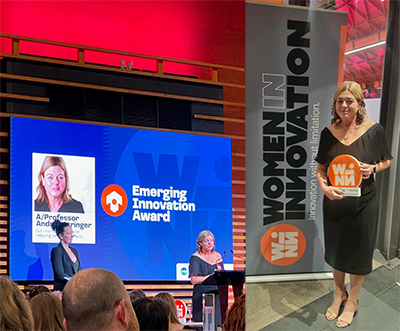
Two UniSA researchers have been recognised at the annual Women in Innovation Awards for their innovative work in medical science and industrial artificial intelligence.
Associate Professor Andrea Stringer, from UniSA Clinical and Health Sciences, received the Emerging Innovation award for her research aimed at improving patient wellbeing during chemotherapy. Her work explores the use of vitamin D and probiotics to reduce inflammation, protect the gut lining, and support beneficial bacteria, thereby promoting overall gut health.
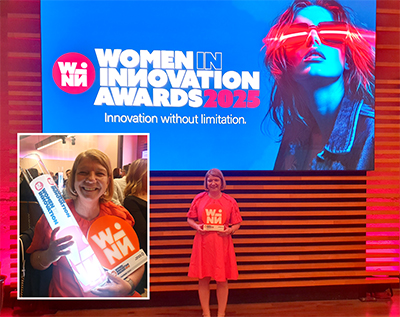
Dr Ana Kuusk, a Senior Adjunct Fellow from UniSA STEM and UniSA’s Industrial AI Research Centre, and Chief Technology Officer of Secora Garage, won the Engineering category for her ongoing industry work – developed from her UniSA PhD – on machine-to-people data integrations for critical infrastructure asset management, named ‘Data Safari’.
UniSA was well-represented at the awards, with 10 out of the 32 finalists associated with the University across categories that cover STEM, sustainability, creative industries, social impact and first nations innovation.
The Women in Innovation (or WINN) Awards has celebrated South Australian women who are leaders and pioneers in their fields. UniSA is the WINN Awards’ Principal Partner and sponsored the Engineering Award in 2025.
UniSA student wins International Student of the Year
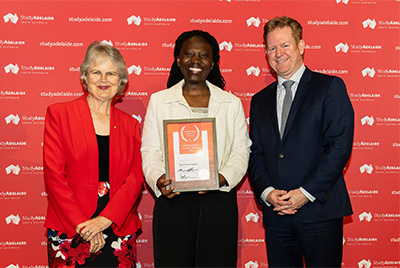
UniSA PhD student, Ruth Appiah, was recognised as International Student of the Year at the 2025 StudyAdelaide awards.
Appiah took out the top prize after winning the Community Engagement category – marking the first time in the history of the awards that a student from this category has gone on to win the overall International Student of the Year award.
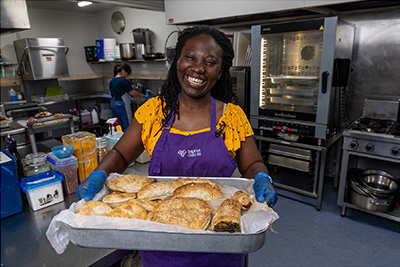 Ruth Appiah volunteering at Baptist Care SA serving breakfast to people in need.
The honour comes as no surprise given Appiah’s outstanding contributions to the local community. As well as serving meals to people in need with Baptist Care SA, she reads The Advertiser on air for Vision Australia Radio and supports refugees through Survivors of Torture and Trauma Rehabilitation Service (STTARS).
The awards celebrate the significant contribution international students make to the South Australian community.
Appiah, who arrived in Adelaide from Ghana in 2023, is completing a PhD in physiotherapy, researching chronic pain among refugees and culturally diverse communities.
Read more about the winners and UniSA’s highly commended students on the StudyAdelaide website.
National OSHC program takes out an SA Science Award
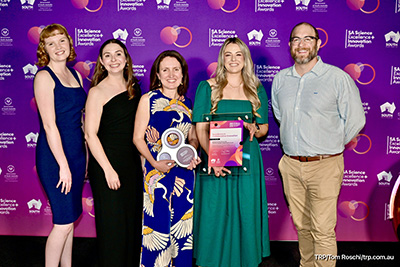 The Excellence in Collaborative Innovation Award was collected by Ms Bethany Newell, Ms Beth Robins, Professor Carol Maher, Dr Kylie Dankiw and Dr Ty Ferguson, on behalf of the wider Activated OSHC team. Photo TRP/TomRoschi/trp.com.au
The Activated OSHC Partnership Team from UniSA’s Allied Health and Human Performance Unit has won the Excellence in Collaborative Innovation Award at the 2025 SA Science Excellence and Innovation Awards.
Through their program Activated OSHC Partnership: Transforming after-school health at scale, the research team – led by Professor Carol Maher and UniSA colleagues and delivered in partnership with 15 partner organisations – has created a national accreditation program that helps OSHC (Out of School Hours Care) services provide high-quality physical activity and reduce screen time. The program supports services to improve children’s daily routines without requiring new infrastructure or major operational changes, making healthier practices achievable across diverse settings.
The initiative recently launched nationwide, with more than 450 OSHC services across Australia joining the program.
“Physical activity and screen time are some of the leading things that influence children’s health and wellbeing,” says Prof Maher.
“One quarter of Australian children attend OSHC and they’re there for several hours each day, so working in partnership with services to support more activity and limit screen use can make a real difference.”
Several UniSA colleagues were also recognised as finalists, including Dr Ashleigh Hull and Dr Amelia (Millie) Mardon in the PhD Research Excellence category, and Associate Professor Tasha Stanton in the Mid-Career STEMM Professional of the Year category.
The SA Science Excellence and Innovation Awards showcase the vital role of science, research and innovation in strengthening industry and society. Being awarded and shortlisted among such strong competition is a significant achievement that highlights the high calibre of talent within UniSA.
Global recognition for tech innovator
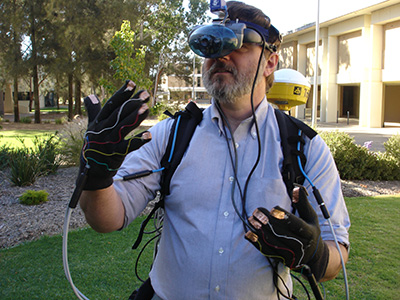
Emeritus Professor Bruce Thomas, founder of the Australian Research Centre for Interactive and Virtual Environments (IVE) at UniSA, has received the prestigious 2025 Career Impact Award at the International Symposium on Mixed and Augmented Reality (ISMAR) conference.
ISMAR is the world’s leading conference for cutting-edge research in augmented and mixed reality, recognising individuals whose work has fundamentally shaped the field.
For more than three decades, Prof Thomas’ work has pushed the boundaries of how humans interact with digital worlds. Under his leadership, the IVE centre has pioneered research in augmented and virtual reality, wearable computers, and interactive visualisation - all from its base at Mawson Lakes campus.
His many breakthroughs include the Tinmith system, one of the first to demonstrate how augmented reality could operate beyond the lab, enabling users to construct and manipulate 3D models while moving through real-world outdoor environments.
His follow-up - ARQuake - broke more ground by transforming the popular video game Quake into the world’s first outdoor AR gaming experience. These early innovations laid the groundwork for the mobile and headset-based AR systems we now use in everyday life.
Prof Thomas has also supervised more than 30 PhD students, helped establish key international conferences and inspired generations of innovators.
Data mining scientist tops Australia in his field two years in a row
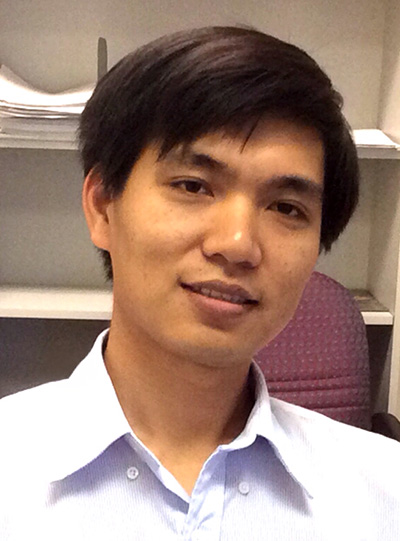 UniSA Associate Professor Thuc Duy Le
UniSA data mining scientist, Associate Professor Thuc Duy Le, has been named the leading bioinformatics and computational biology researcher in Australia for the second year in a row.
Assoc Prof Le is among 250 researchers featured in The Australian 2026 Research Magazine, ranking the most impactful universities and highly rated individual researchers of the year.
The list is based on citation data from the past five years, focusing on publications in the top 20 journals within each academic field, using Google Scholar metrics.
The Australian identified Assoc Prof Le as the top contributor in the field of bioinformatics and computational biology within the broader discipline of Engineering and Computer Science. He also topped his field in 2025.
Assoc Prof Le develops AI methodologies based on causal models, with applications in a wide range of biological problems.
UniSA researchers added to ARC College of Experts
Three UniSA staff have been inducted into the Australian Research Council (ARC) 2026 College of Experts to help shape the future of Australian research.
ARC has inducted Associate Professor Erik Champion, Dr Zoe Doubleday and Professor Jacqui Ramagge into the 2026 College of Experts. The ARC College of Experts plays a key role in identifying research excellence, moderating external assessments of research grant proposals and recommending projects to be funded.
UniSA Professor of Culture and Creative Industries Susan Luckman has been elected as a Fellow of the Australian Academy of the Humanities. The Australian Academy of the Humanities was established in 1969 to advance knowledge of, and the pursuit of excellence in the humanities. Prof Luckman's election as a Fellow is a significant achievement and is testament to the outstanding contribution she has made to her discipline, and the exceptionally high regard in which she is held by her peers in the humanities community, both in Australia and abroad. Read more about her work on the Australian Academy of the Humanities website.
New UniSA humanities Fellow
UniSA Professor of Culture and Creative Industries Susan Luckman has been elected as a Fellow of the Australian Academy of the Humanities. The Australian Academy of the Humanities was established in 1969 to advance knowledge of, and the pursuit of excellence in the humanities. Prof Luckman's election as a Fellow is a significant achievement and is testament to the outstanding contribution she has made to her discipline, and the exceptionally high regard in which she is held by her peers in the humanities community, both in Australia and abroad. Read more about her work on the Australian Academy of the Humanities website.
ANNOUNCEMENTS
UniSA achieves carbon neutrality for directly controlled operations
UniSA has achieved carbon neutrality for its directly controlled operations across its campuses.
To reach this milestone, the University first conducted an internal assessment of its operational emissions in 2024, using both national accounting methods and internationally recognised standards, and had those emissions independently reviewed.
The University offset these emissions by purchasing Australian Carbon Credit Units (ACCUs) – tradeable financial products created by accredited projects that remove greenhouse gases from the atmosphere.
UniSA’s Chief Operating Officer and Chief Property Officer Phil Clatworthy says the achievement forms part of the University’s broader efforts to mitigate climate change.
“This undertaking reflects UniSA’s longstanding commitment to reducing its directly controlled carbon emissions,” he says.
“It also aligns with our broader goal of helping reduce emissions across the higher education sector.
“What we’ve achieved demonstrates the positive action we are taking as an institution to reduce our environmental footprint and help address the impacts of human-generated climate change.”
The University’s operational emissions were assessed with reference to the Greenhouse Gas Protocol, which provides the world’s most widely used greenhouse gas accounting standards. The emissions included in the assessment were those created from operations over which the University had direct control, referred to by the Protocol as Scope 1 and Scope 2 emissions.
Scope 1 emissions occur from sources that are owned or controlled by an organisation or company, and include those created from the consumption of gas, refrigerants, and transport and stationary fuels. Scope 2 emissions are those created by electricity purchase and consumption.
The University acquired the majority of its ACCUs through its investment in the South Australian Conservation Alliance Site #2 project facilitated by GreenCollar, one of Australia’s largest environmental market investors and project developers.
The project’s objective is to regenerate natural wood and shrublands to the north of Wudinna, near the Gawler Ranges. By restoring native vegetation, it both sequesters atmospheric carbon and reverses land degradation in the area caused by feral animals and livestock.
Since 2007, UniSA has reduced its operational emissions by more than 50%. This has been driven by the decarbonisation of the state’s electricity grid as well as the implementation of various on-campus initiatives including the installation of 2MW of solar PV at Mawson Lakes and City West.
As the opening of Adelaide University approaches, the University has committed to reviewing its carbon targets, definitions, measurement methods and broader sustainability ambitions in collaboration with its community.
9 Light Square unveiled as the Lloyd Building in honour of Vice Chancellor Professor David Lloyd
UniSA has formally named 9 Light Square – the home of the University’s Enterprise Hub – the Lloyd Building, recognising the leadership of Vice Chancellor and President, Professor David Lloyd.
The new name was unveiled on 1 December at a ceremony attended by members of the University Council and Prof Lloyd’s family.
Importantly, the building’s Kaurna name, Yangadlitya Kumangka – “for the future, together” – has been retained, and both titles will continue into Adelaide University.
UniSA Chancellor John Hill says the naming acknowledges Prof Lloyd’s transformative impact on the institution across more than a decade.
“Since joining UniSA in 2013, Professor Lloyd has steered the University through a period of significant growth and achievement,” Hill says.
“From his first days here, he carried a conviction about what this University should be: something fresh, something to challenge the status quo; an institution focused on improving the future.
“Of course, 9 Light Square has been home to UniSA’s Enterprise Hub – a place where meaningful partnerships are made.
“So, in naming it the Lloyd Building, we cement David’s legacy as the leader who guided us in becoming known as Australia’s University of Enterprise.”
The Lloyd Building will continue to be the ‘front door’ for industry, government and community engagement under Adelaide University.
Other Stories
- What a journey … Meet three of UniSA’s longest-serving staff
- A standing ovation
- Work starts on Aboriginal Knowledges Centre
- Social media ban: How parents can help kids stay connected
- From the Vice Chancellor: Of Stories and Sequels
- Closing the chapter
- Time Capsule celebrates UniSA community
- Achievements and Announcements
- New Yarning Circles complete
- In Pictures: 2025 Unstoppable Awards and Celebrating staff service
- The latest books from UniSA researchers